Is It Safe to Drink Well Water With Manganese in Fort Worth?
Black stains and a metallic taste are common signs, but only a test tells you whether your well water is just annoying or something you should stop drinking.
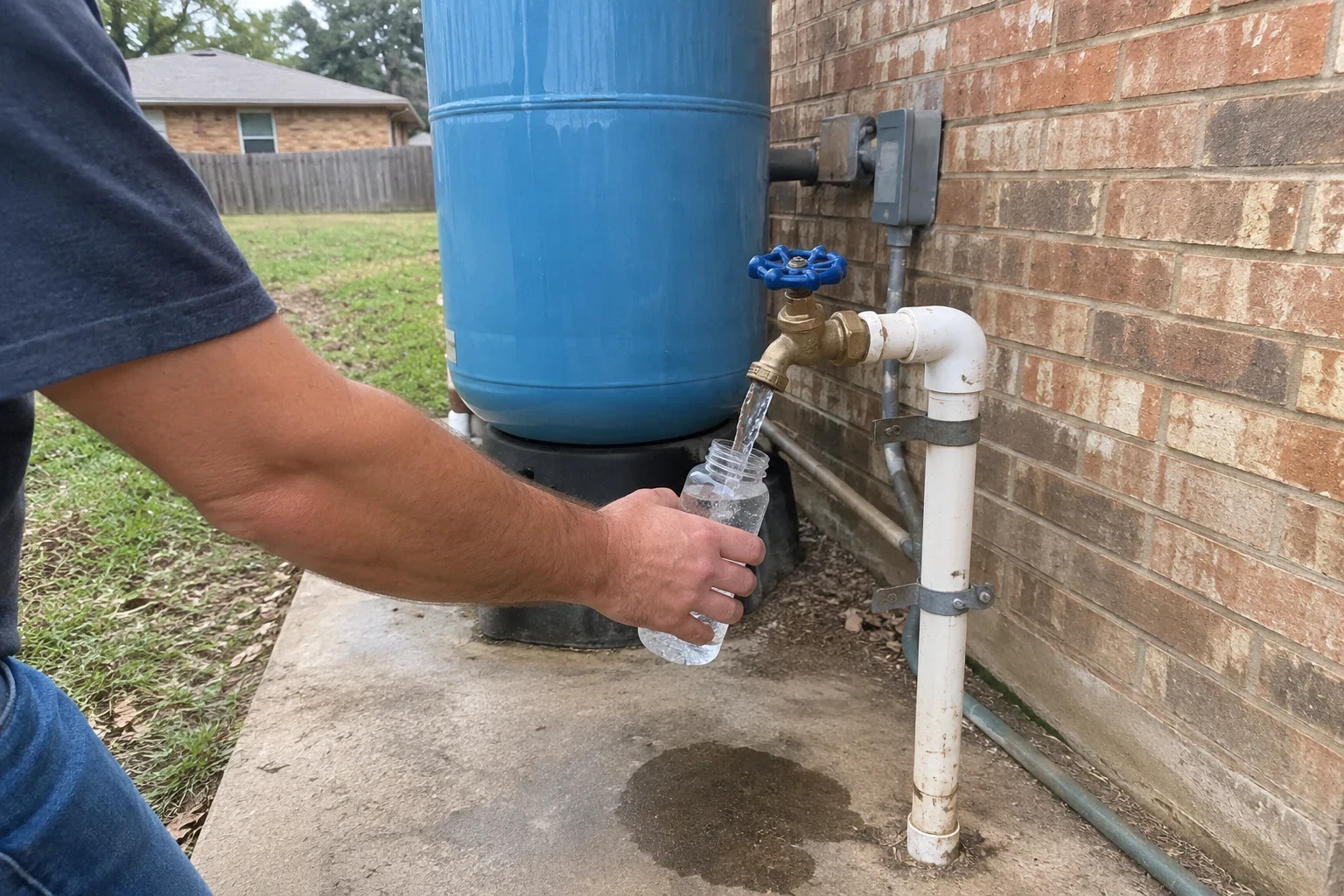
Is it safe to drink well water with manganese?
Often yes at low levels, but it depends on how much is in your water. Small amounts mostly cause black stains and a metallic taste. Higher amounts can be a health concern, especially for babies. A lab test of your well water tells you which side of that line you are on. Ask us about testing at (817) 552-5599.
What manganese does to your water
Manganese is a natural metal that dissolves into groundwater as it moves through rock and soil. Many private wells have some. It often shows up alongside iron, and the two cause a lot of the same trouble.
At low levels the problems are mostly cosmetic. The water may look clear coming out of the tap, then turn gray or black after it sits or meets bleach. You will see it in your home before you taste it.
- Black or dark brown stains in toilets, tubs and sinks
- Black specks in a glass of water or clogging faucet aerators
- Laundry that comes out dingy, with dark spots after bleach
- A bitter or metallic taste in coffee and tea
- Dark buildup inside the toilet tank and on fixtures
How much manganese is too much to drink?
The EPA uses two numbers. At 0.05 milligrams per liter, manganese starts causing taste and staining problems. That number is about looks and taste, not health. The EPA's health advisory level is higher, at 0.3 milligrams per liter.
Above that higher level, long-term drinking is where the concern comes in. Too much manganese over years has been linked to effects on the nervous system. Babies are the most sensitive group, so the EPA advises against using high-manganese water for infant formula.
So the plain answer is this. A little manganese is a nuisance. A lot is a reason to treat your drinking water, and to use another source for a baby's bottles until it is fixed.
How to find out what is in your well
Stains tell you manganese or iron is there. They do not tell you how much. For that you need a lab test. We take the sample from a tap before any filter or softener, so you see what the well is really putting out.
We test for more than manganese. Iron, pH and hardness change which treatment works, and a bacteria check is smart for any private well. Low pH is common with manganese problems and has to be dealt with, or the filter will not do its job.
Levels can shift with the seasons and with how hard the well is being pumped, like during a dry Fort Worth summer when lawns are watered more. If your first result is close to the line, a second test later in the year is worth it.
- Sample before any treatment equipment
- Test manganese, iron, pH and hardness together
- Add a bacteria test for private wells
- Retest once a year, or sooner if stains come back
What removes manganese from well water
The right fix depends on your numbers. For most homes we use iron and sediment filtration at the point where water enters the house. These filters use a special media that turns dissolved manganese into solid particles, catches them, then flushes them out on a set schedule called a backwash.
If your water is also hard, a water softener can take out small amounts of manganese, but only after a hardness test shows you need one. For extra protection at the kitchen tap, under-sink reverse osmosis cleans up the water you drink and cook with. Some homes need the whole-house filter and the drinking water system together. Many do not.
- Whole-house iron and manganese filter for stains and taste through your home
- pH correction first if the water is acidic
- Water softener only when hardness testing supports it
- Under-sink reverse osmosis for drinking and cooking water
What happens after the filter goes in
Installing the system is half the job. After it is running, we come back and test the water again so you can see the numbers dropped. If they did not drop enough, we adjust the backwash settings or the setup until they do.
We also show you how to care for it. You will know how to check the backwash timer, what the filter sounds like when it cycles and what a normal pressure reading looks like. If dark stains start showing up again, that is the sign the media needs attention. Our filter replacement and maintenance visits keep it working the way it did on day one.
More questions about manganese in well water
Something not covered here? (817) 552-5599
Can I boil water to get rid of manganese?
No. Boiling does not remove manganese. It boils off water and leaves the metal behind, so the level in the pot actually goes up.
Is it safe to shower in water with manganese?
For most people, yes. Very little manganese gets through the skin. The bigger issues in the shower are stained grout and fixtures, which a whole-house filter takes care of.
Will a pitcher filter take out manganese?
Most pitcher filters are made for chlorine taste, not metals like manganese. Check what the filter is rated to remove before relying on it, especially for a baby's water.
Why did the black stains come back after a few months?
Usually the filter media is worn out, the backwash is set wrong or the well water changed. A retest shows which one it is.
Find out what your well is really putting out
Call us and we will talk through your stains, taste or test results, set up a lab test of your well and explain which fix fits your numbers. After any install, we come back to retest and show you how to care for it.