ServicesWater testing
Water Testing in Fort Worth
Plenty of people buy a filter first and test later. We do it the other way around. We sample water at your tap, explain each number in plain words, and tell you what is worth fixing, if anything. Then we call back once the lab results are in.
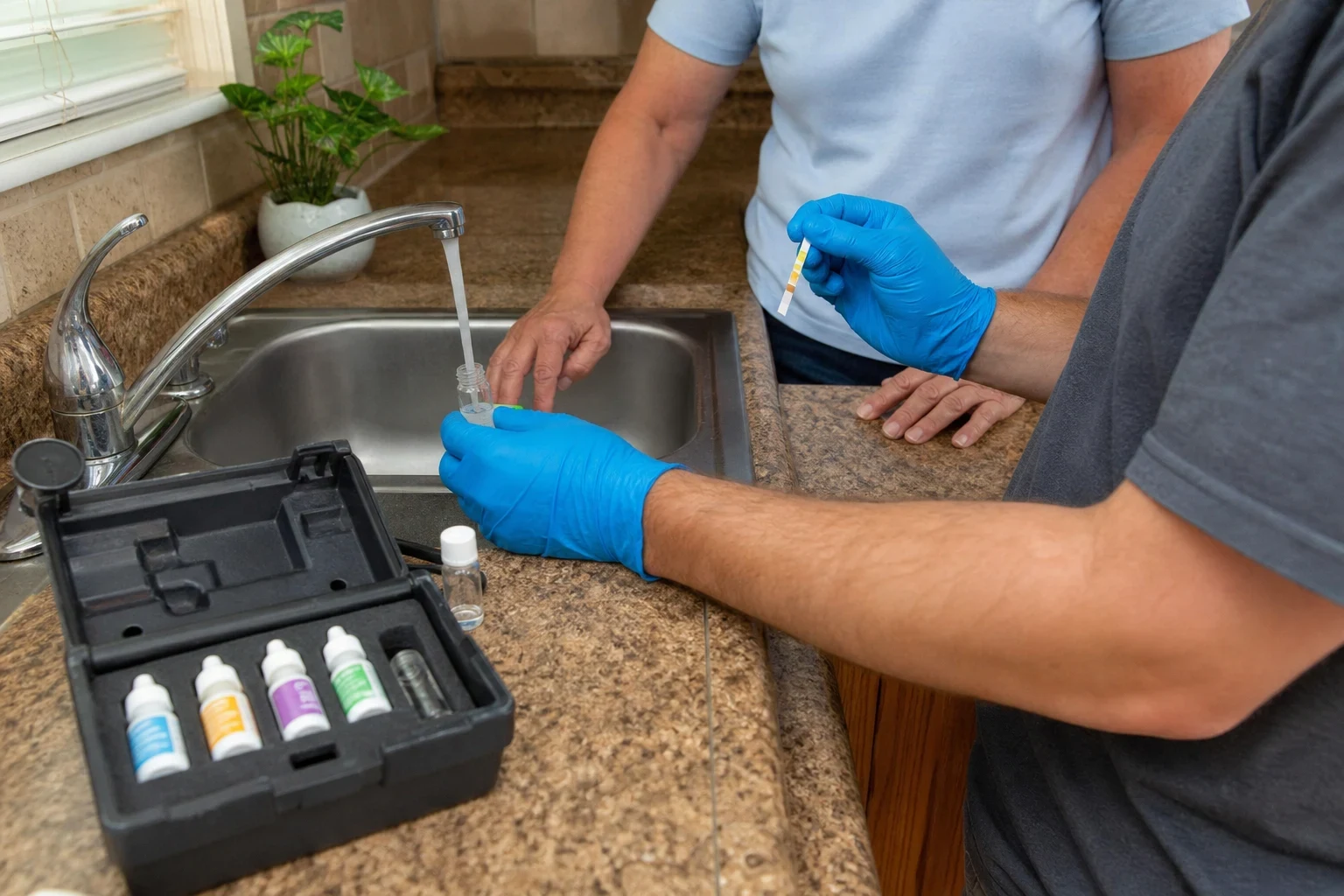
Test first, then decide
Water testing tells you what is coming out of your faucet. It covers hardness, iron, chlorine, pH and total dissolved solids, plus lead or other items when there is a reason to look. Some of that we read right at your sink. The rest goes to a lab.
Most city water meets drinking standards when it leaves the plant. What changes is what happens after that, inside your own pipes and fixtures. Older plumbing, a water heater full of scale or a rotten-egg smell from one tap all point to different causes. A test shows which one you have.
That matters because the fixes are very different. A softener does nothing for chlorine taste. A carbon filter does nothing for hardness. We would rather you buy one right thing, or nothing at all, than three wrong ones.
What we check in your water
Hardness
Calcium and magnesium are what make water hard. We read the level in grains per gallon, and that one figure tells us whether a softener belongs in your home at all.
Iron and sediment
We check for iron and look at what settles out of the sample. Orange stains in sinks or grit in aerators usually show up here.
Chlorine or chloramine
City water is disinfected, and that is a good thing. We measure the level so you know whether a taste or smell complaint is coming from the treatment or from something else.
pH and total dissolved solids
Low pH can eat at copper pipes over time. A high dissolved solids reading tells us there is more in the water worth a closer look.
Lead, when it fits
If your home has older plumbing or you have a reason to worry, we send a sample to a lab for lead. We will tell you plainly whether we think you need it.
A written results sheet
You get every number on paper, next to the standard it is measured against. No mystery scores, no color-changing drama on the counter.
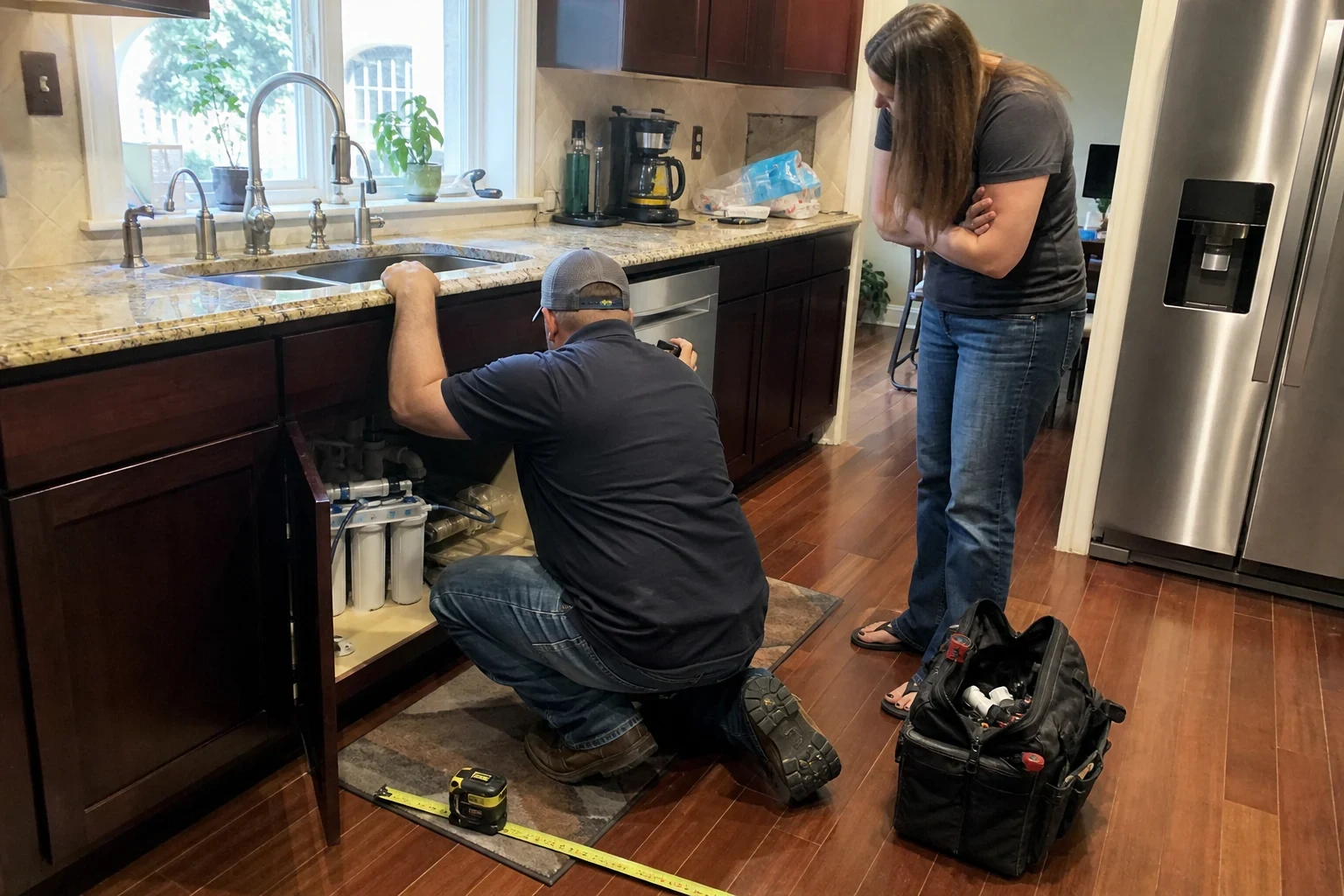
When a water test makes sense
- Chalky buildup on faucets
- A white crust on shower heads and taps is a hard water clue. Testing shows the actual level, so you can tell an annoying cleaning chore from a real reason for a softener.
- Rings or specks in the sink or tub
- Orange and brown marks tend to come from iron, while black specks can have another cause. A test pins it down so the filter you buy is the right one.
- An odd taste or smell
- Pool smell, metal taste and rotten-egg odor all come from different places. We figure out which one is in your water.
- Plumbing with some age on it
- When a house still has its original pipes and nobody knows the material, checking for lead is a sensible move, more so if children live there.
- A system quote is on the table
- Before you sign for a softener or whole-house unit someone quoted, run your own test. It's the easiest way to keep from paying for more than you need.
How a test visit goes
- 1
Quick talk by phone
Let us know what bothers you about the water and roughly when your home was built. From that we pick which tests to bring and decide whether a lab sample is worth it.
- 2
Samples at your tap
We take water from the kitchen faucet and, if needed, a bathroom or the line near the water heater. On-site readings take a few minutes. We touch nothing else in your home.
- 3
Go over the numbers
We sit down with you and walk through each result. If something looks fine, we say so. If a fix makes sense, we explain which one and why.
- 4
Lab results and a check-back
When lab results come in, we call you and go through them. If you add a filter later, we retest afterward so you can see the difference in your own numbers.
What sets the price of a water test
A basic test at your tap costs less than a full lab panel. We tell you the price before we take a single sample, and we only suggest lab work when there is a real reason for it.
- Which tests you need
- Hardness, chlorine and pH are quick readings. Lead, bacteria or a wider contaminant panel goes to a lab and adds to the cost.
- Number of taps
- One kitchen sample covers most homes. Testing several fixtures to track down a single bad tap takes more time.
- City water or a well
- Private wells in the surrounding area need a broader check than city water, since nobody else is testing them for you.
- Retesting after a fix
- If we install a system, a follow-up test shows it is working. We will tell you up front how that is handled.
What people ask about testing
- Can I drink Fort Worth city water?
- Before it reaches your street, the city has already treated the water and measured it against drinking rules. In homes, the issues we run into are usually taste, hardness or something picked up from aging pipes. A test reads what comes out of your faucet, not an average for the whole city.
- Is a store-bought test strip good enough?
- A strip can point you in a direction for a first pass. It won't give a precise answer on lead or iron, and the colors are easy to read wrong. Where the number has to be right, we rely on meters and a lab.
- Is the test just a lead-in to a sales pitch?
- No. When the water checks out, we say so and head out. When something deserves a fix, we lay out the single option that matches it and its price. The choice is yours, and you make it with your results in front of you.
- When will I see my results?
- Anything we read on site, you see before we leave. Lab samples take more time, and once they're back we phone you and go over them together.
- Can you test a private well?
- We can. A well in a town like Saginaw or Benbrook gets a wider panel, because nobody but the owner is keeping an eye on that water.
- Will I need another test down the road?
- Once a new filter or softener is up and running, one test confirms it's doing the job. From then on, every year or two is enough, unless you notice a change.
Know your water before you buy anything
One visit gets you real numbers and a straight answer. We follow up when the lab results land, and again after any fix, so you are never guessing.