ServicesUnder-sink reverse osmosis
Under-Sink Reverse Osmosis in Fort Worth
We set up a reverse osmosis system in the cabinet below your kitchen sink, feeding a separate faucet with clean water for drinking and cooking. We test your water first, size the system to the space, show you the controls and call back a few weeks later to confirm it is working well.
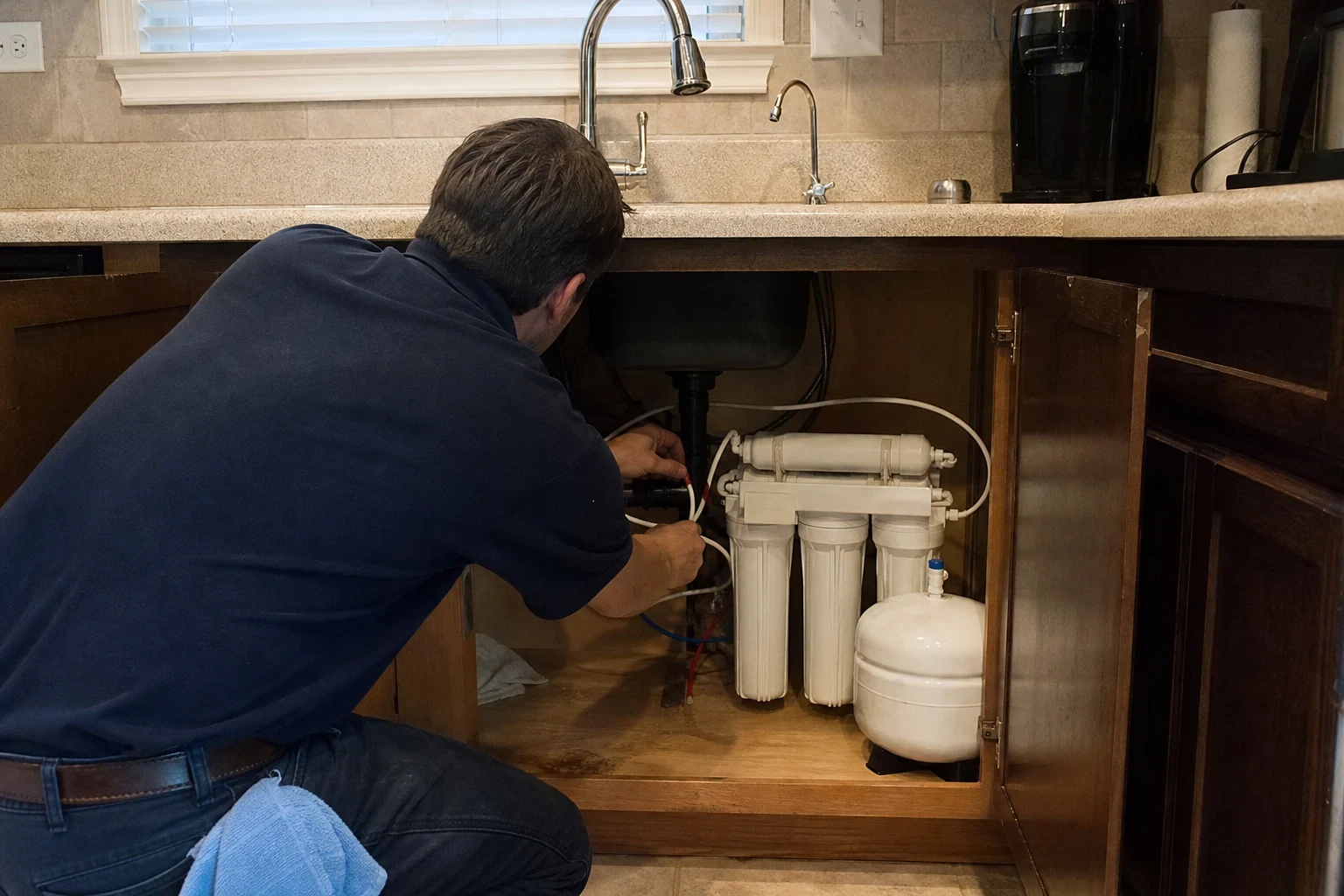
How reverse osmosis works and who it suits
Inside the unit is a membrane with pores far smaller than anything you can see. Water gets pushed through it, and most of the dissolved material stays on the other side and rinses away to the drain. You end up with clean water for your glass, the coffee maker, the pasta pot and the ice tray. It works at one tap only. The rest of the house stays on regular water.
This is the right fit when the water you drink is your main concern. Maybe it is a chlorine or chloramine taste, a worry about lead coming from older pipes in your home, or simply wanting a step beyond what the city sends you. If the real trouble is dry skin, a shower smell or spots on every fixture, whole-house carbon filtration or a water softener might serve you better. We test before recommending any of them, and we will say plainly which one makes sense.
What comes with an install
A water test before we quote
We check what is in your tap water and how much is dissolved in it. That tells us whether RO is worth it for you and which filters to put in front of the membrane.
Prefilters, membrane and postfilter
A sediment filter catches grit. A carbon filter takes out chlorine or chloramine so it does not wear out the membrane early. A final carbon stage polishes the taste right before the faucet.
Storage tank and dedicated faucet
RO makes water slowly, so a small pressurized tank holds a supply ready to go. We mount a separate faucet on your sink, using an existing hole when there is one or drilling a clean new one.
Drain and supply connections
We tie into your cold line with a shutoff valve and connect the waste line to your drain the right way, with an air gap or proper drain saddle. No kinked tubing, no slow drips under the cabinet.
Optional refrigerator line
Your fridge dispenser and ice maker can draw from the same RO water. We trace the path from the sink to the fridge before quoting and let you know whether it is an easy hookup or a longer job.
A walkthrough and a check-back
Before we leave, we show you the shutoffs, the filter order and what normal looks like. Then we follow up after you have used it a while to check pressure, taste and leaks.
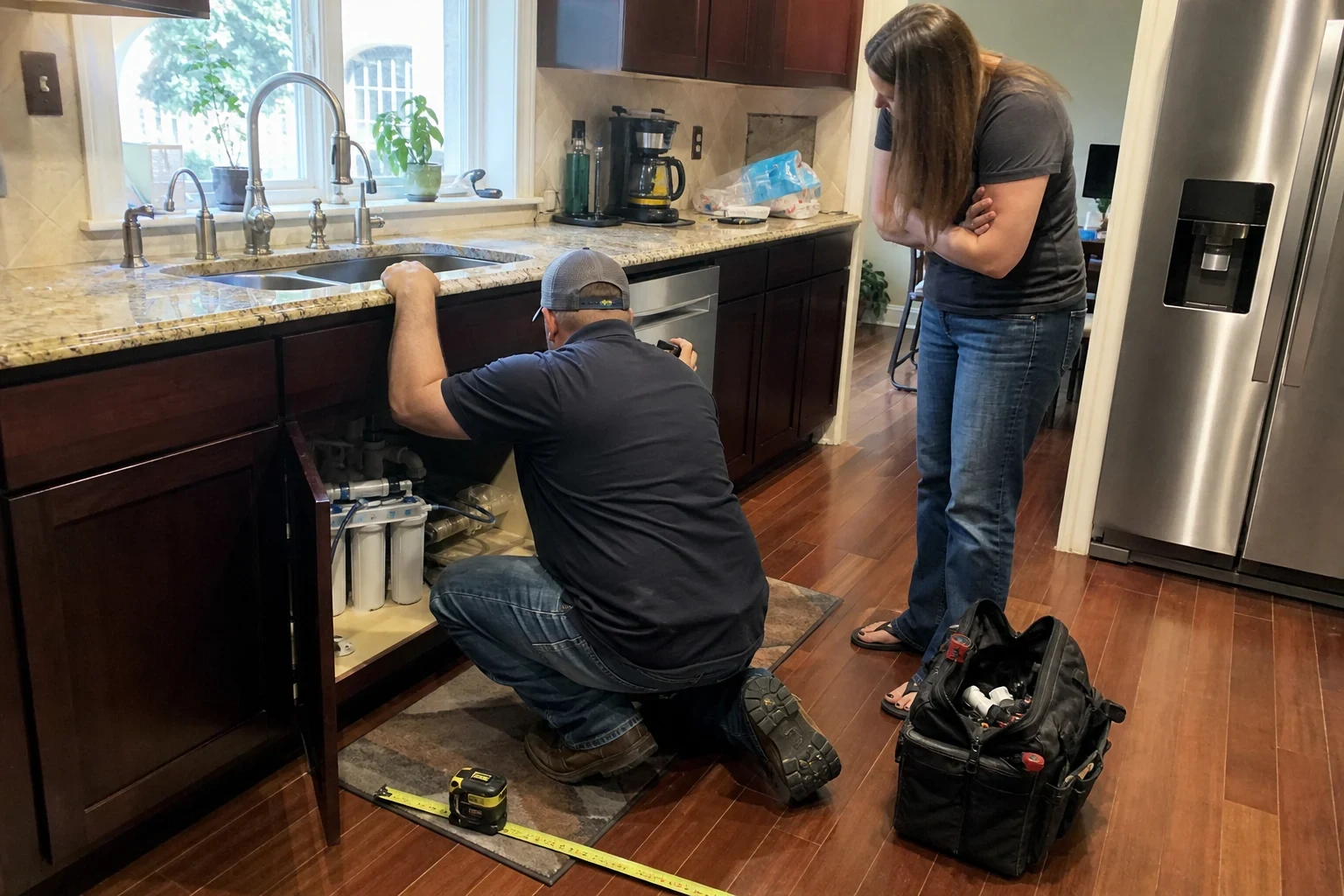
When an RO faucet makes sense
- Cases of bottled water keep coming home
- If you haul water home from the store every week, a dedicated RO tap usually takes its place. Less plastic ends up in the recycling bin too.
- Tap water tastes like a pool
- A chlorine or chloramine taste ruins coffee and tea. The carbon stages in an RO system take that out before the water reaches your glass.
- Your pipes have some age on them
- Copper lines put in before the late 1980s were often joined with solder that contained lead. Water can leave the treatment plant clean and still pick some up on the way through your walls. An RO faucet is a solid way to handle that at the spot where you fill your glass.
- A test showed high dissolved solids
- If a water test came back with a high reading for total dissolved solids or a specific contaminant, RO is built for exactly that kind of reduction.
- You want filtered water for a baby or someone sick
- Some families want extra assurance for formula or for someone with a weak immune system. RO gives you that at one faucet without treating every tap in the house.
How the job goes
- 1
Water check and cabinet look
First we run a test on your tap water, then open the cabinet to see the space, the drain layout and your water pressure. If pressure runs low, the system may need a small booster pump, and you hear about that before any quote.
- 2
Written estimate
You get a written quote that lists the system, the faucet, any extras like a fridge line, and the labor. What is on that paper is what we install.
- 3
Install day
Plan on part of a morning or afternoon. We put a drop cloth on your floor, empty the cabinet together with you, then hang the filters and tank, set the faucet and hook up the lines. Before we pack up, we flush the filters and drain the first tank so your first pour tastes right.
- 4
Show you how to care for it
We walk you through the shutoffs and how to spot a leak. We also explain when each filter is due and leave the schedule written down where you can find it.
- 5
We check back
After you have lived with it a few weeks, we follow up. We ask how the taste and flow are, and if anything seems off we come out and look at it.
What moves the price
Every RO quote depends on your water, your sink and what you want the system to do. We give you the number in writing after we have tested and looked under the cabinet. Here is what changes it.
- The system itself
- Basic four- and five-stage systems cost less than units with remineralizing stages, higher output or tankless designs. We match the system to how much water your household drinks.
- Your countertop
- Drilling a faucet hole in laminate is quick. Granite, quartz or a farmhouse sink takes more time and the right bits, so it costs more.
- Water pressure
- RO needs decent pressure to work. If yours runs low, a booster pump adds parts and labor but keeps the system from being slow and wasteful.
- Extra lines
- Running a line to your fridge or ice maker adds tubing and time. A short run through the cabinet is simple; a long run across the kitchen is more work.
- Filter upkeep over time
- Prefilters and the membrane get replaced on a schedule. We go over that cost before you buy so you know what owning the system really looks like.
What people ask about RO under the sink
- How much water goes down the drain with RO?
- Some water washes across the membrane and leaves through the drain line, and that rinse keeps it from clogging. Current units drain much less than older ones, and steady pressure lowers it more. We set yours up to run as efficiently as your plumbing will let it.
- When do the filters get replaced?
- Expect to swap the prefilters every six to twelve months, based on your water and how much you use. The membrane goes longer, often around two years. You get the schedule in writing, and our filter replacement and maintenance service can take it on for you.
- Does RO strip out the minerals too?
- It does. Most minerals come out along with the rest, and most people get theirs from food anyway. If you like how water tastes with a few minerals in it, we can add a remineralizing stage.
- Is there room under my sink if I have a disposal?
- In most kitchens, yes. The filters and tank use part of the cabinet, and we lay them out around the disposal and drain. We look at the space before quoting so install day holds no surprises.
- What's the point of the follow-up?
- For the first few weeks a new system is still settling. A fitting may seep, the taste can shift while the carbon breaks in, and the tank pressure may need a tweak. A check-back finds those small issues before the cabinet gets wet.
- If city water passes the standards, why add RO?
- You may not need it. Water that meets every rule can still carry a chlorine taste or pick up lead from old pipes in your house. We test, share what we find, and sometimes the answer is to skip it and keep your money.
Better water at your kitchen tap
Give us a quick rundown of your kitchen setup and what you would change about your water. From there we test, put the price in writing, and check in once the system has had time to settle.