ServicesWhole-house carbon filtration
Whole-House Carbon Filtration in Fort Worth
We put a carbon filter on the main line so every tap, shower and appliance in your home gets water without that pool smell. After the install, we come back to check the system and show you how to look after it.
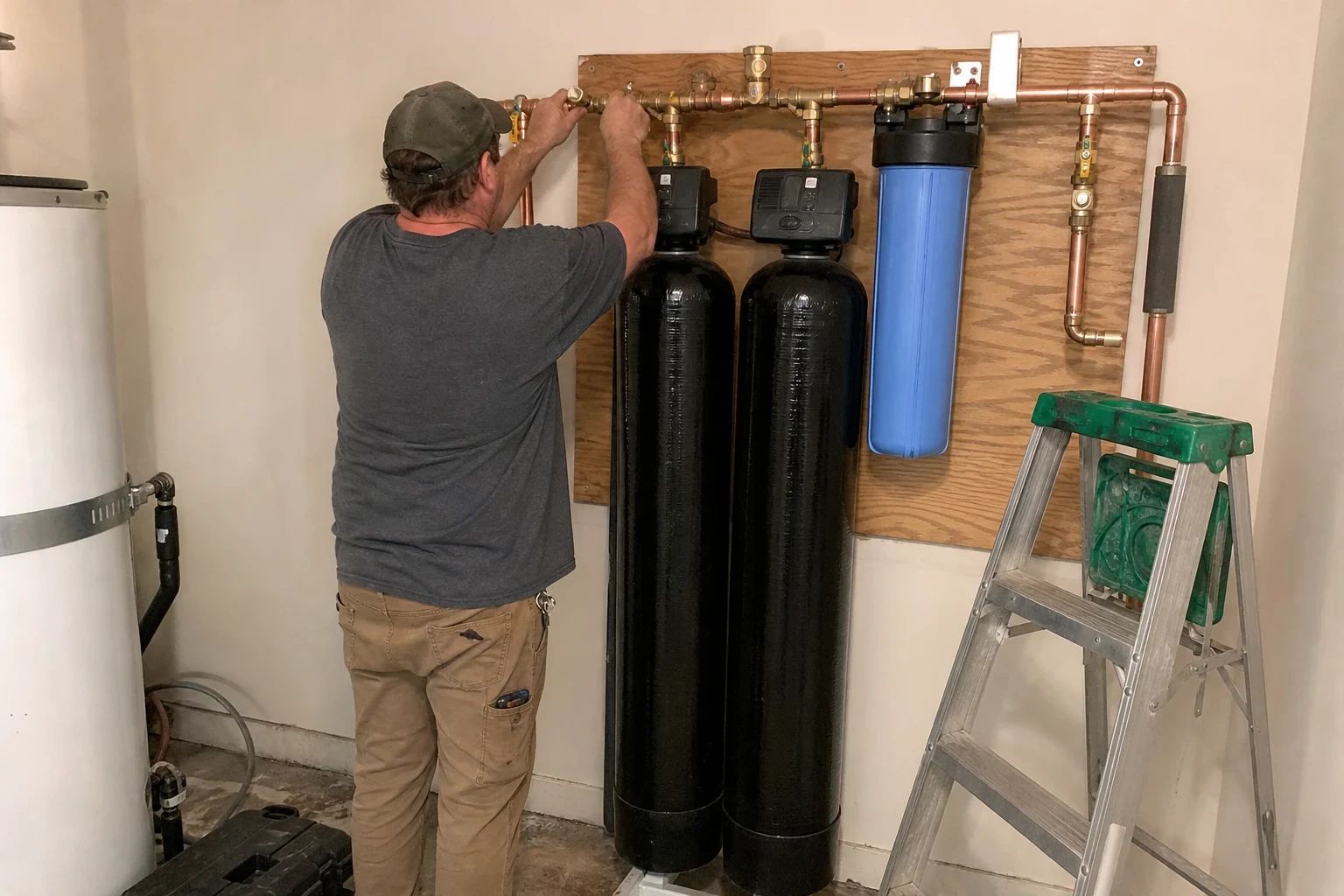
What a whole-house carbon filter does
City water is safe to drink, but it is treated with a disinfectant so it stays clean on the way to you. That treatment is what you taste and smell. A carbon filter grabs it, along with many of the organic compounds that give water an off taste, before the water reaches any fixture in your home.
The filter sits where the main line comes in, so it works for the kitchen sink, the showers, the washer and the ice maker at the same time. Many homes around Fort Worth sit on slab foundations, so that spot is often in the garage or near an outside hose bib. We look at your setup before we suggest anything.
If your main worry is drinking water alone, an under-sink reverse osmosis unit may fit better. If you are not sure what is in your water, water testing comes first. We will tell you which one makes sense.
What the job includes
A look at your plumbing first
We find where the main enters, check pipe size and material, and check there is room for the tank or housings. You hear what we plan before any pipe is cut.
The right carbon for your water
Plain carbon does a good job on chlorine. If the water is treated with chloramine, it takes a catalytic grade and a bigger bed so the water spends longer in contact with it. We match the media to your water and your flow, not to a stock box.
A sediment pre-filter
A cheap sediment cartridge ahead of the carbon keeps grit from clogging it. That makes the carbon last longer and keeps your pressure steady.
A bypass loop
We add valves so you can route water around the filter for service. You never have to shut off the whole house to change a cartridge.
Leak check and hand-off
Fresh carbon gets rinsed out until the water runs clear, and we go over each fitting for leaks before we pack up. We sweep the work area, then point out which valve does what so you can work them yourself.
A check-back after the install
We come back after the system has run a while to check pressure, look for leaks and answer questions. We also leave a simple care schedule written down.
Signs a carbon system is the right call
Water smells like a pool
That bleach smell at the shower or the kitchen tap is the disinfectant. Carbon is the standard fix for it.
Coffee and tea taste flat
Disinfectant and organic compounds change how drinks taste. A pot of coffee or a pitcher of iced tea is usually where the off flavor shows up.
Skin and hair feel dry after a shower
Some people find treated water rough on skin and hair. A pitcher filter does nothing for the shower, but a whole-house system does.
You keep buying bottled water
If the family won't drink from the tap because of the taste, a filter on the main line fixes it at every faucet.
Pitcher and faucet filters aren't enough
Small filters only cover one tap and need constant swaps. Once you are tired of that, it is time to look at the whole house.
How install day goes
- 1
We talk it through by phone
You tell us what bothers you about your water. We ask about your home, the number of bathrooms and where the main comes in. If testing makes sense first, we say so.
- 2
We look and give a written estimate
We see the install spot in person and write up each part and the labor line by line. No work starts until you agree to it.
- 3
We install the system
We shut off the water, cut in the bypass, pre-filter and carbon unit, then turn the water back on. Most homes are without water for only part of the day, and we tell you the window ahead of time.
- 4
We flush and test
New carbon releases fine dust at first, so we run water through it until that clears. We check pressure at a few fixtures before we call it done.
- 5
We check back
After you've lived with it for a bit, we come back or call to see how it's running. We go over when to change the pre-filter and when the carbon will need attention.
What moves the price
There is no single price for a whole-house system. It depends on your home, your water and the work at the install spot. Your written estimate spells out each piece so you know what you are paying for.
- Tank or cartridge system
- Large carbon tanks cost more up front but last for years between media changes. Cartridge housings cost less to install but need swaps more often.
- Size of your home
- More bathrooms means more flow at once. The system has to be big enough that your shower pressure doesn't drop when the washer runs.
- Grade of media
- The catalytic grade that handles chloramine is pricier than the standard kind. If your water doesn't need it, it stays off the estimate.
- Where the main comes in
- When the main runs along a bare garage wall, the install goes fast. A cramped closet, an outdoor spot that needs a cover, or aging pipe that needs new fittings takes more hours and more parts.
- Extra equipment
- Some homes need a softener or an iron and sediment filter ahead of the carbon. We only add those if a test supports it.
Carbon filter questions we hear most
Something not covered here? (817) 552-5599
Will my showers lose pressure once the filter is on the main line?
Not if the system is the right size for your home. When people do notice weaker flow, it is almost always an undersized unit or a pre-filter that is packed with grit. We measure pressure at your fixtures on install day and again when we check back.
How often does the carbon need changing?
That comes down to which setup you have and how many gallons the family runs through it. Cartridges get swapped more often, while media in a tank lasts much longer. We write down a schedule for your system, and our filter replacement and maintenance service can take care of it for you.
Does carbon remove hardness or iron?
No. Carbon is for taste, odor and many organic compounds. Hardness needs a softener and iron needs its own filter, and we only suggest those after testing your water.
Is the water safe to drink after filtering?
Yes. Carbon does not make water less safe. If you want extra treatment for drinking and cooking water, an under-sink reverse osmosis unit can sit at the kitchen sink along with the whole-house system.
Do I need to do anything after install?
Not much. Watch for a drop in pressure or a return of the chlorine smell, since both mean a filter is due. We go over this before we leave and again when we check back.
Get better-tasting water at every tap
Tell us what you notice about your water and how your home is set up. We will tell you if carbon is the right fit and what it takes to install it.