ServicesFilter replacement
Filter Replacement and Maintenance in Fort Worth
A filter only works while it's fresh. We change cartridges and membranes, check every fitting for drips, and flush the system so it runs clean. Before we leave, we show you what we did and write down when the next change is due.
Why Filters Need Regular Changes
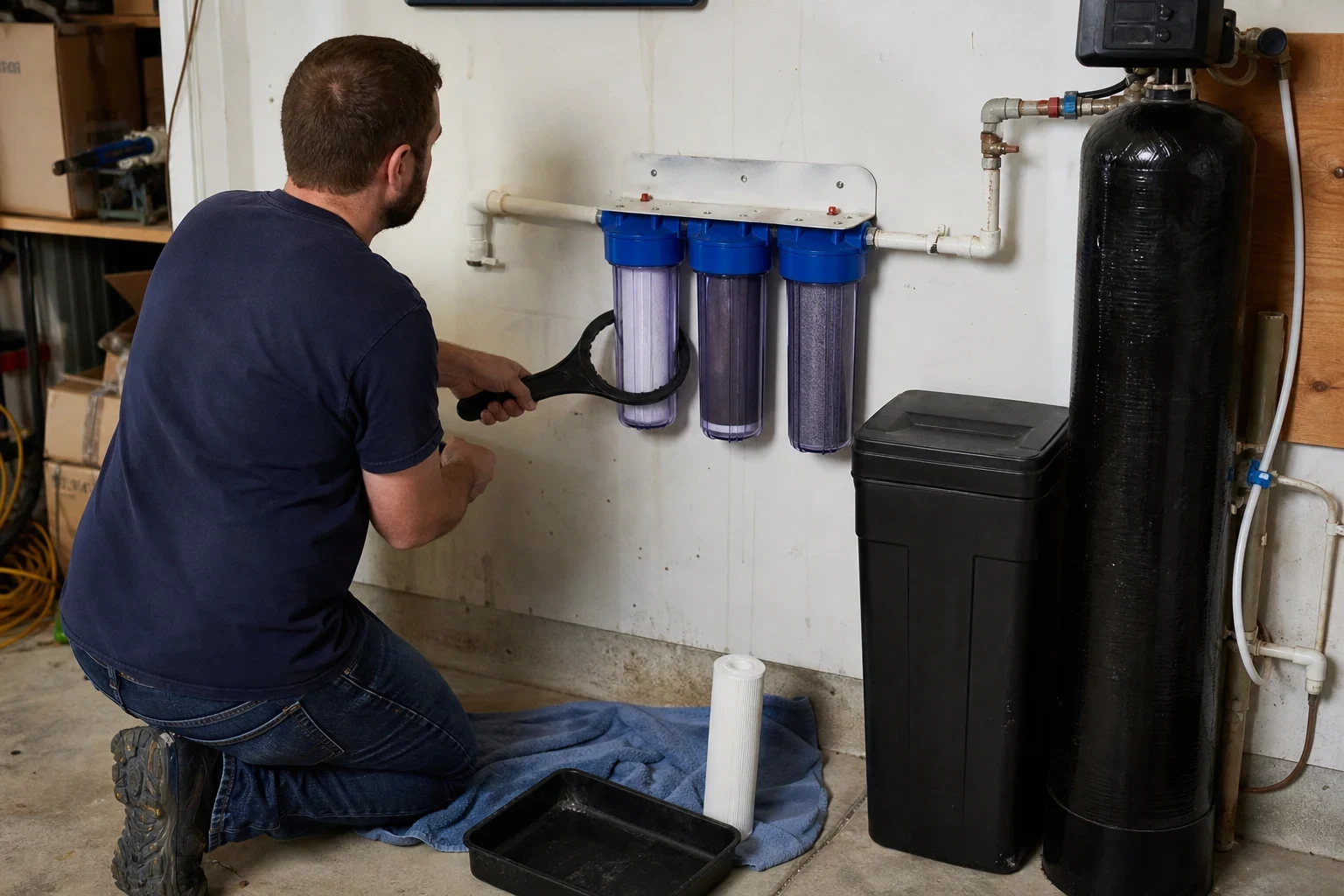
No cartridge lasts forever. Grit builds up in a sediment filter until water struggles to get through. Carbon fills up and quits pulling out the chlorine taste. A reverse osmosis membrane makes a little less water each month. From the outside nothing looks wrong, but the water at the tap is no longer getting the treatment you paid for.
Our job is the routine upkeep: new cartridges, a look at the parts that wear, and catching a slow drip before it ruins the cabinet floor. We work on the systems we put in and on most common brands we didn't. A while after the visit, we check back with you to make sure the water tastes right and the cabinet stays dry.
What We Do on a Service Visit
- New cartridges and membranes
- Sediment, carbon and post filters get swapped on the schedule your system calls for. With reverse osmosis units, we measure output and only replace the membrane once it's actually worn out.
- O-rings and housing seals
- Most slow drips start at an O-ring that has dried out or gotten pinched. We wipe the housing threads clean and look over each ring. Good ones get a thin coat of food-grade silicone grease. A ring that has gone flat or split gets swapped for a new one.
- RO sanitizing and tank check
- For under-sink reverse osmosis, we sanitize the lines during the change and check the air charge in the storage tank. A low tank charge is a common reason the faucet only trickles.
- Whole-house system check
- On whole-house carbon or iron and sediment systems, we look at the pressure gauges, the bypass valve and the control head. If a backwashing tank is set wrong, we reset it and tell you why.
- Flush and leak test
- New cartridges get flushed until the water runs clear. Then we watch every fitting under pressure before we close up.
- A written next-due date
- We label each housing with the date and leave you a short note on what was changed and when it's due again.
Signs Your Filters Are Due
The taste or smell is back
If the chlorine taste you got rid of has crept back, the carbon is likely spent. It stops working quietly, without any warning light.
The drinking faucet slows down
A slow RO faucet usually means clogged prefilters, a worn membrane or a tank that's lost its air charge. All three are part of a normal service visit.
Lower pressure through the house
A loaded sediment cartridge on a whole-house system can choke flow to every shower and tap. A big drop between the two pressure gauges tells the story.
Dark or slimy cartridges
If you can see through the housing and the cartridge has turned brown or orange, it's full. Iron and grit show up fast.
Water under the sink
A damp cabinet floor or a slow drip at a housing often points to an old O-ring. Small leaks are cheap to fix and costly to ignore.
You can't remember the last change
If nobody wrote it down, it's probably overdue. We'll set a start date for you.
How a Service Visit Goes
- 1
A short call first
Tell us the brand and model if you know it, or describe the system and where it sits. That way we show up with the right cartridges instead of making a second trip.
- 2
Shut off and swap
We close the supply valve or put the system in bypass, relieve pressure and lay down a towel and pan. Old cartridges come out, housings get cleaned, and new filters and seals go in.
- 3
Flush, test and tidy up
We bring the water back slowly, flush the new media and leak-check every joint. Old filters leave with us and the cabinet gets wiped down.
- 4
Walk-through and check-back
We show you the bypass and shutoff valves and what to watch for. A little while after the visit, we check back to ask how the water tastes and whether anything has changed.
What Moves the Cost
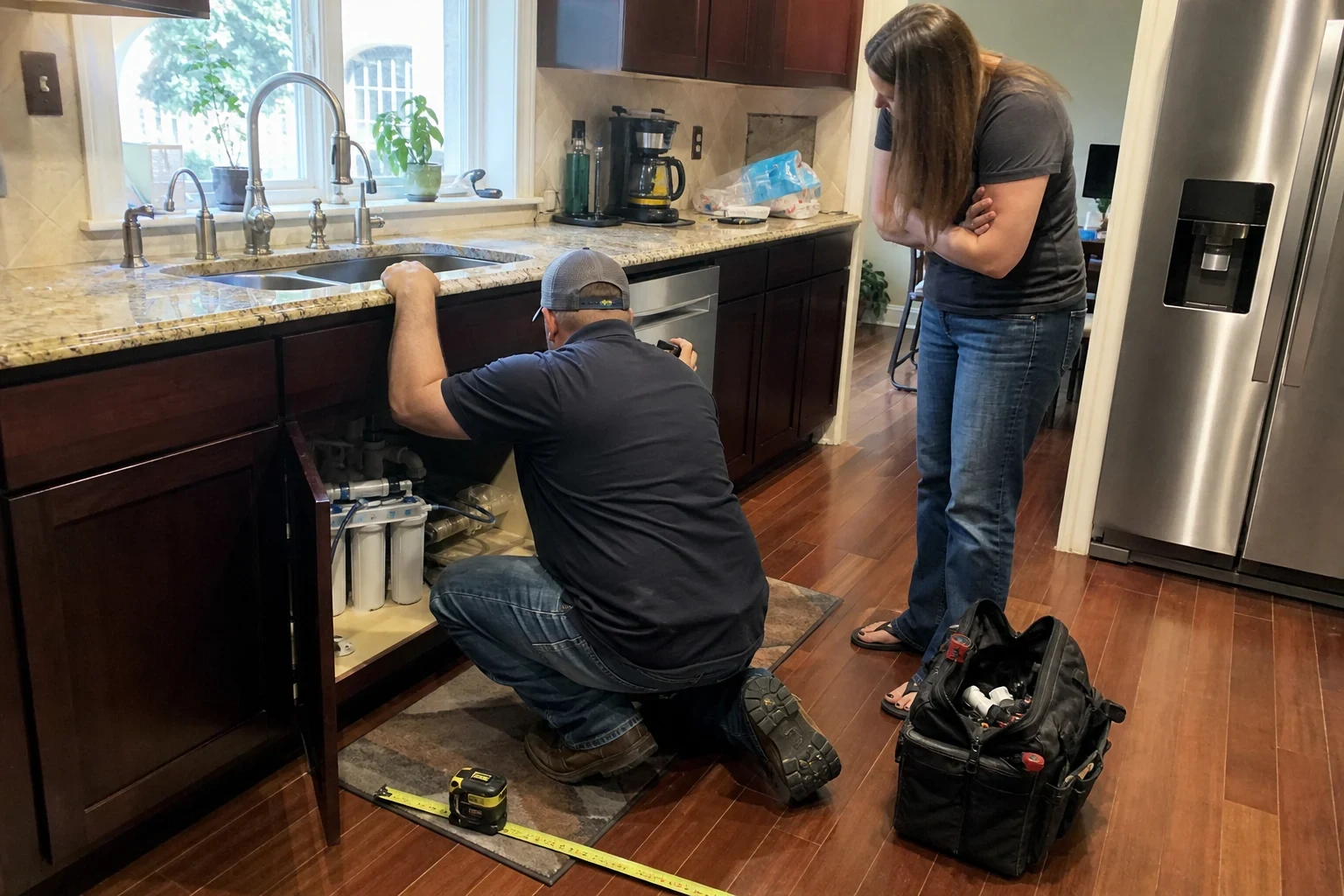
Most of the price is the parts. Labor depends on how many housings we open and how easy they are to reach. We talk through the likely cost by phone before we come out, and if we find something extra on site, we explain it before doing it.
- Type and number of stages
- A single whole-house cartridge is quick. A five-stage reverse osmosis unit with a membrane and post filter takes more parts and more time.
- Cartridge brand and size
- Standard-size cartridges are easy to stock. Proprietary or discontinued filters cost more and sometimes need ordering ahead.
- How overdue the system is
- Housings left too long can stick, and badly fouled lines may need extra sanitizing or new tubing. Regular changes keep visits short.
- Where the system sits
- A tight sink cabinet or a unit in a hot garage or outside wall takes longer to work on. In North Texas summer heat, garage systems also wear plastic parts faster, so we check those closely.
Filter Maintenance Questions
Something not covered here? (817) 552-5599
How often should my filters be changed?
That comes down to the type of filter and how much water runs through it in your home. Roughly, sediment prefilters often last a few months, carbon six to twelve months, and RO membranes a couple of years. We'll build a schedule around your system and leave it with you in writing.
Will you service a system someone else installed?
Yes, in most cases. We work on most common brands and standard cartridge sizes. If you tell us the model by phone, we can tell you if we have the parts before we come out.
Should I just do the filter changes on my own?
Plenty of homeowners handle it, and we'll walk you through the steps while we're there. The two spots that cause trouble are letting the pressure off before opening a housing and getting the O-ring to sit right. If it's not something you want on your list, we can take care of it on schedule.
Is my water unsafe if a filter is overdue?
Usually it just means the filter has stopped helping, so the water is back to what comes from the tap. The bigger risk is low flow, or bacteria growing in an old cartridge left far past its date. Changing on time avoids both.
Do I need to be home for the visit?
Yes. The work happens inside your home, and we want to walk you through what we changed. Most visits are short, and we'll give you a sense of timing when you call.
What if my filters need changing much faster than expected?
That usually means something in the water is loading them up, like iron or heavy sediment. We may suggest water testing to see what's going on. Sometimes adding an iron and sediment filter ahead of the others makes everything last longer.
Get Your Filters Back on Schedule
Give us the brand of your system, or just describe it, plus a rough idea of when the filters were last swapped. We'll show up with the right parts, do the change, and check in afterward to be sure everything runs right.