ServicesIron and sediment filtration
Iron and Sediment Filtration in Fort Worth
Orange stains in the tub, grit in the faucet screens, water that looks cloudy after the tap sits. We find out what is in your water, put in a filter that fits the problem, and come back after the install to make sure it is doing its job.
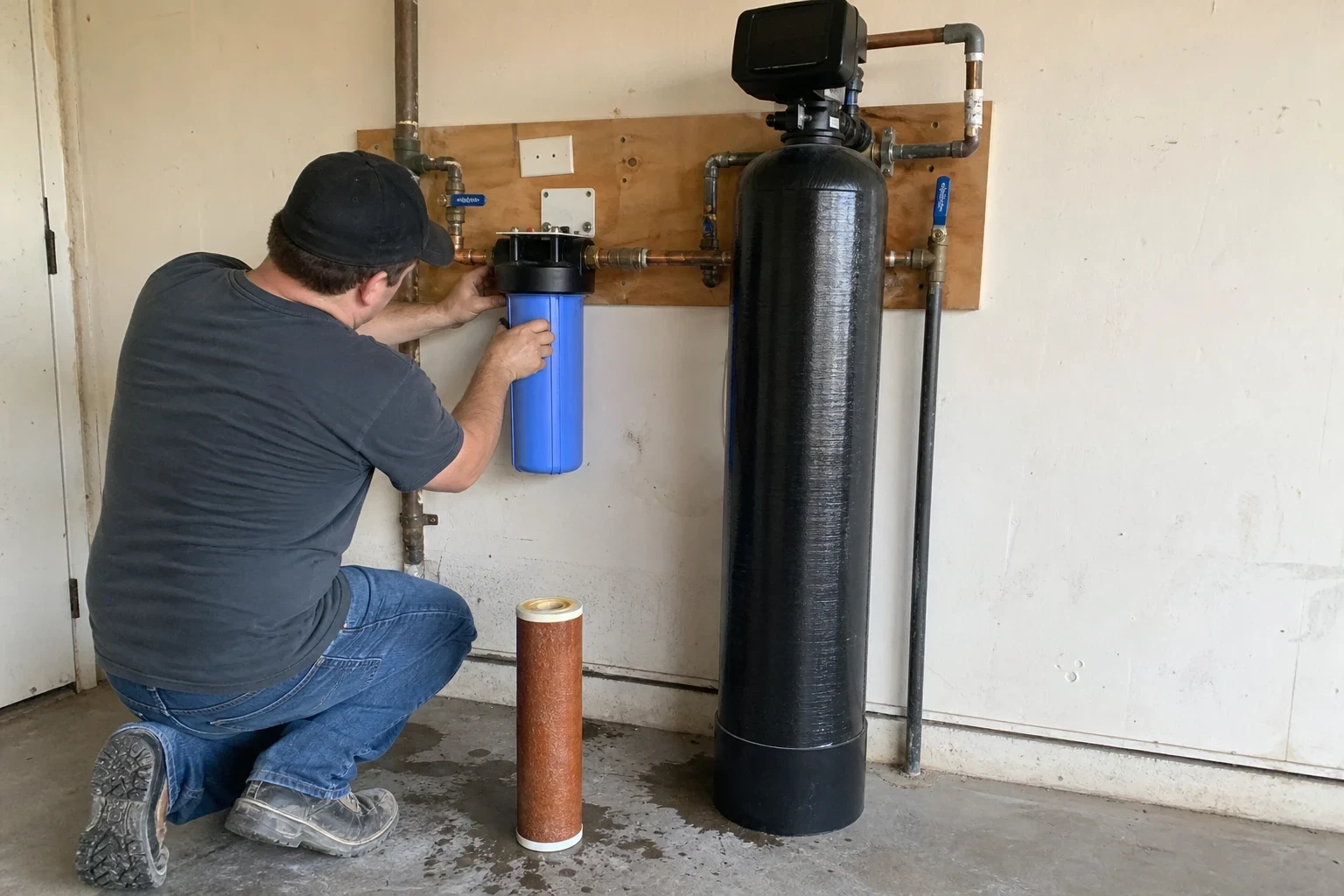
What this filter does and when it makes sense
Grit and iron get lumped together, but they behave differently. Grit is anything solid riding along in the line: sand, flakes of scale, small pieces of old pipe. Iron comes two ways. Some is rust you can already see. Some is dissolved, so the water runs clear from the tap and only turns orange after it meets air. A basic cartridge stops the solid stuff. Dissolved iron has to be turned into a solid first, and then the filter can catch it.
So we test before we recommend any equipment. Sometimes the stains come from aging galvanized pipe inside the walls. A filter where water enters the house can't clean water that picks up rust after it passes through. If that is your situation, you will hear it from us. When the iron or grit arrives with the supply, or from a well, a point-of-entry filter usually fixes it.
After the install, we check back. Iron filters take a bit of upkeep, and we would rather show you how it works than leave you guessing.
What the job includes
- Testing before anything else
- We measure iron and sediment, plus pH and a couple of other readings, because acidic water makes iron tougher to pull out. You get the numbers in hand before we suggest equipment. Our water testing page goes into more detail.
- Sizing to your home
- We count bathrooms and look at how much water runs at the same time. Too small a filter cuts your pressure. Too big a filter costs more than it should.
- The right filter type
- Loose grit gets a spin-down screen or a sediment cartridge. Dissolved iron gets a backwashing media tank that oxidizes it and holds it. Some homes need both, with sediment first so the media lasts longer.
- Install at the main line
- The filter goes where water enters your home. We add shutoff and bypass valves so you keep water during service, and we put down drop cloths wherever we work.
- A walkthrough before we leave
- We show you the bypass, the backwash timer if your unit has one, and what a used-up cartridge looks like. You get the same notes on paper.
- A follow-up check
- Once the system has been running a while, we call or come by to see how the water looks and whether any settings need a tweak.
Signs your water needs iron or sediment filtering
Orange or brown stains
Rusty marks in the toilet bowl, tub or sink that show up again days after cleaning. White towels and shirts going dull is part of the same problem.
Grit in aerators
Take off a faucet tip. Sand or flakes in the screen mean sediment is making it through. That same grit wears down valves in washers and dishwashers.
Clear water that turns cloudy
Pour a glass and leave it on the counter. A yellow or orange tint later on is dissolved iron reacting with air.
Metallic taste
Coffee and tea that taste off, or ice cubes with a tint, often point to iron.
Water heater trouble
Rumbling, popping, or brown water when you open the drain valve can mean sediment is building up in the tank.
How the work goes
- 1
We talk by phone
Tell us what you are noticing, and let us know if your home is on city water or a private well. Then we pick a time to come test.
- 2
Test and plain answer
We test at your home and walk you through what the readings mean. If a filter solves it, you get a written estimate listing each part. If your pipes are the cause, we tell you.
- 3
Install day
Plan on a few hours for most jobs. We shut your water off briefly while we cut into the line, then flush the new system, look over every joint for leaks and clean up the work area.
- 4
Care walkthrough
We show you how to bypass the filter, change a cartridge and read the backwash settings. Nothing gets left as a mystery.
- 5
We check back
After it has run a few weeks we follow up. Stain-free fixtures are the goal, and we retest if something seems off.
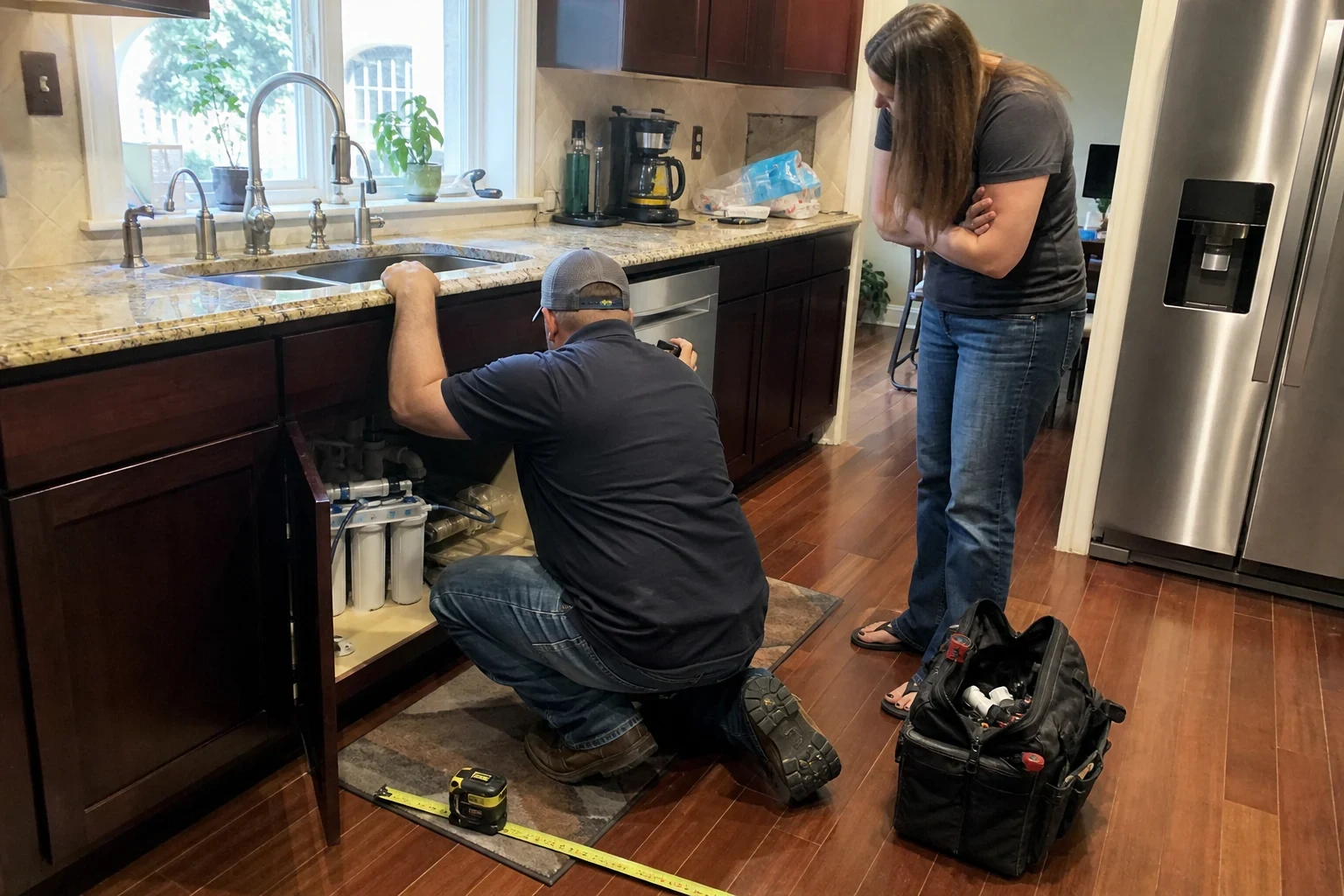
What moves the price
There is no one price for an iron filter because the water decides the equipment. A sediment cartridge is a small job. A backwashing iron tank is a bigger one. Your written estimate shows exactly what is in it and why.
- How much iron, and what kind
- Low levels of visible rust can be caught by a cartridge. Higher dissolved iron needs oxidizing media, and sometimes air injection, which costs more.
- Size of your home
- More bathrooms and higher water use mean a larger tank or housing to keep pressure up.
- Where the line is
- An easy-to-reach main line in a garage goes faster than one behind finished walls or in a tight crawlspace.
- Drain access
- Backwashing filters need a drain nearby. If there isn't one, we have to run a line to it.
- Pairing with other treatment
- If you also want whole-house carbon filtration or a softener, we plan them in the right order so one protects the other.
What people ask about iron and grit filters
Something not covered here? (817) 552-5599
Can a filter stop stains caused by my old pipes?
Sometimes not. When the rust comes from galvanized pipe inside the house, a filter at the main line is before the source. Our test checks for that, so you don't spend money on a fix that won't work.
Does the filter lower water pressure?
Not when it's sized for your house. Pressure loss usually traces to a cartridge clogged with grit or a housing that was too small to begin with. We size for the number of taps running together and show you how to tell when a cartridge needs replacing.
What kind of upkeep does it need?
Expect to change sediment cartridges a few times a year, more often if there's a lot of grit. Backwashing tanks rinse themselves on a timer, and their media lasts for years. If you'd rather hand it off, our filter replacement and maintenance service covers it.
Could a softener handle the iron instead?
It can pull out a small amount of dissolved iron, but over the months that iron coats the resin and wears it down. We suggest a softener only when a hardness test supports it. If you need both, the iron filter normally goes ahead of the softener to protect it.
Is this something well owners need?
Wells often bring in more iron and sand than city lines, so testing is a good idea. Homes on city water can have rust and grit too. Either way, the test results tell us which filter is right.
Find out what is staining your fixtures
Give us a call, describe the stains or grit, and we will book a time to test the water in your home. If a filter fixes it, we put it in and follow up later to confirm the rust is gone.