Which Bottled Water Is the Purest for Fort Worth Homeowners?
The answer comes down to a few words on the label and how the water was treated before it was bottled.
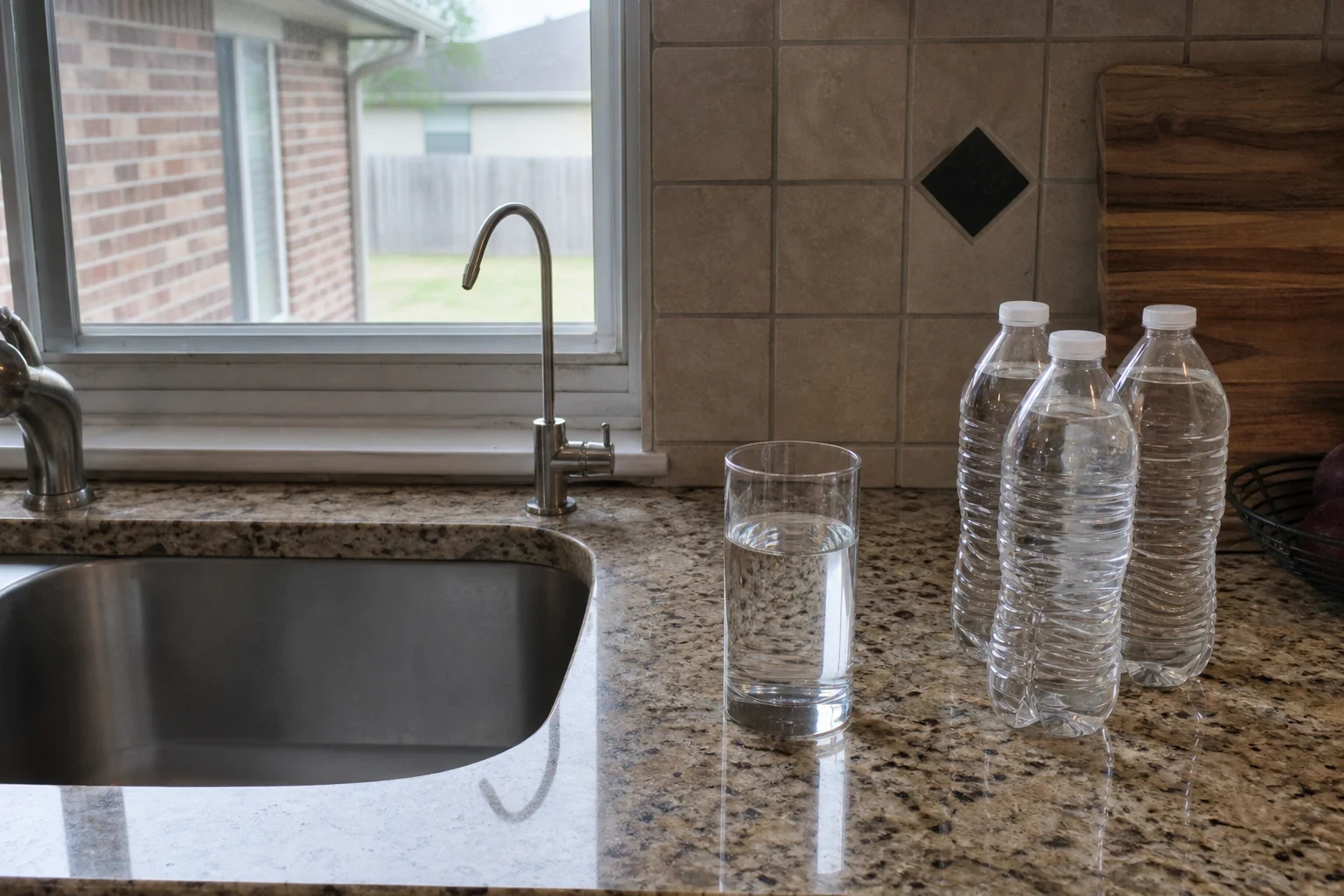
Which bottled water is the purest?
Distilled water and water labeled "purified" by reverse osmosis are the purest bottled waters, because nearly all dissolved minerals and contaminants are taken out. Spring and mineral water are not meant to be pure. They keep their natural minerals on purpose. Purest is not always best for taste, so read the label and the bottler's quality report.
What does "purest" mean for drinking water?
Pure water is just water with almost nothing dissolved in it. People measure this as total dissolved solids, or TDS. A low TDS number means fewer minerals, salts and metals in the bottle.
Keep two things apart. Minerals like calcium and magnesium are not harmful, and many people like the taste. Contaminants are different. Those are things like lead, nitrates or leftover chemicals you do not want at any level. A very pure water has little of either. A good drinking water has none of the bad stuff, and some minerals can stay.
Distilled, purified, spring or mineral: how do they compare?
The label tells you most of what you need. Here is how we explain it to customers standing in their kitchen.
- Distilled water: boiled into steam and cooled back to liquid. Minerals and most contaminants are left behind. It is about as pure as bottled water gets, and it tastes flat to most people.
- Purified water: treated by reverse osmosis, distillation or deionization. It has to meet a strict standard for low dissolved solids. Many brands add a small amount of minerals back for taste, and the label will say so.
- Spring water: comes from an underground source and is usually filtered and disinfected. It keeps its natural minerals, so it is not the purest choice, but it often tastes the best.
- Mineral water: has a set level of minerals from its source. It is chosen for taste and mineral content, not purity.
How can you check a bottled water brand?
Start with the label. It should name the water type and the source. If it says it comes from a municipal source, that means it started as city tap water and was then treated. That is common and nothing to worry about, as long as it was purified after.
Next, look for the bottler's water quality report. Most bottlers publish one with test results for the contaminants they check. If you cannot find a report or a way to request it, pick a different brand. An independent certification mark on the bottle is another good sign that someone outside the company tested it.
Storage matters too. Bottled water left in a hot car or a garage through a Texas summer can pick up a plastic taste. Keep cases inside, out of the sun, and use them before the date printed on the bottle.
Is bottled water purer than Fort Worth tap water?
Not always. Fort Worth draws its water from area lakes and reservoirs and treats it before it reaches your street. Tap water is held to federal drinking water rules, and bottled water is held to its own federal rules. Both can be good water.
The bigger question is what happens after the water leaves the city's main. Old service lines, aging pipes, water heater buildup and fixtures inside your home can change what comes out of the faucet. Some people also just do not like the taste or smell of the disinfectant the city uses. None of that shows up on a city report.
That is why we start with water testing. A test of your own tap tells you what is actually in your glass. Then you can decide if you need a filter, or if your tap water is already fine to drink.
Can you get bottled-quality water at your kitchen sink?
Yes. An under-sink reverse osmosis system uses the same basic process as most purified bottled water. It pushes water through a very fine membrane that holds back dissolved solids, lead and many other contaminants. The clean water goes to a small tank and a separate faucet at your sink.
It also means no more hauling cases from the store or finding room for them in the pantry. The catch is upkeep. Pre-filters and the membrane wear out over time, and a tired filter stops doing its job. After we install a system, we check back with you and show you how to tell when it is time for filter replacement and maintenance. That way the water stays as clean in year three as it was on day one.
More questions about bottled water
Something not covered here? (817) 552-5599
Is it safe to drink distilled water every day?
For most healthy adults, yes. It has no minerals, so you get those from food instead. Many people find the flat taste is the bigger issue.
Does purified bottled water have fluoride?
Reverse osmosis and distillation remove most fluoride. Some brands add it back, and the label will list it if they do.
Does bottled water go bad?
The water itself does not spoil much, but the plastic can affect taste over time, especially in heat. Follow the date on the bottle and store it somewhere cool.
How do I know if my tap water needs a filter at all?
Test it first. A test of your own faucet shows what is there, so you only buy a filter if the results call for one.
Find out what is in your tap water
Call and tell us what is bothering you about your water. We will explain how testing works in your home and what the results can tell you, so you know if you need a filter or not.